Anchor Crucifix Meaning: 7 Ultimate Facts & History (2026

For centuries, believers have sought tangible symbols to express their invisible faith, turning to sacred geometry and historical emblems to ground their spiritual journey. The anchor crucifix stands as one of the most profound, ancient, and enduring designs in Christian history, weaving together the sacrifice of Jesus Christ with an unshakeable promise of hope.
However, understanding the true depth of this emblem requires looking past its visual appeal and diving into the theological waters of the early church. To fully grasp the anchor crucifix meaning, meaning must be drawn from both biblical scripture and the catacombs of Rome, where persecuted Christians first carved this emblem into stone. For deeper context on religious jewelry and its enduring power, you can explore our religious jewelry collection to see how ancient faith informs modern devotion.
Table of Contents
- Historical Origins of the Anchor Cross
- Theological Symbolism of the Anchor Crucifix
- Differences Between Anchor Crosses and Traditional Crucifixes
- The Mariner Cross in Modern Christian Faith
- Materials and Craftsmanship in Religious Jewelry
- How to Choose and Care for an Anchor Crucifix
- The Bennett and Cross Distinction
- Frequently Asked Questions
- Conclusion
Historical Origins of the Anchor Cross
The anchor cross originated in the late 1st century as a clandestine symbol used by persecuted Christians in the Roman Empire to secretly identify their faith and mark their sacred burial sites. Long before it became a popular piece of fine jewelry, the anchor was a matter of life and death, serving as a covert signal among the faithful.
The Catacombs and Early Christian Identity
During times of severe Roman persecution under emperors like Nero and Trajan, open displays of Christian faith were incredibly dangerous. The early Christians avoided direct depictions of the crucifixion of Jesus to prevent mockery and deadly consequences. Instead, they adopted the anchor, a common maritime tool, and disguised the cross within its crossbar and mast.
Archaeologists have discovered more than seventy examples of the anchor symbol carved into the epitaphs of the Catacombs of St. Priscilla and the Cemetery of St. Domitilla. Often, the anchor was flanked by the Alpha and Omega Christian symbol, underscoring its connection to Christ, the beginning and the end. It allowed believers to communicate safely, recognizing one another through a shared, hidden visual language.
The Link to Saint Clement of Rome
The anchor crucifix meaning history is also deeply tied to Saint Clement of Rome, the third successor of Saint Peter. According to early Christian tradition, Emperor Trajan banished Clement to the Chersonesus (modern Crimea), where he was forced to work in a stone quarry. When he miraculously brought forth a spring of water to quench the thirst of his fellow prisoners, converting hundreds in the process, the Roman authorities condemned him.
He was martyred by being tied to an iron anchor and thrown into the Black Sea. From that moment onward, the anchor cross became inextricably linked with Saint Clement, transforming it into the "Mariner's Cross" and cementing its status as a symbol of ultimate martyrdom and unyielding faith.
Theological Symbolism of the Anchor Crucifix
Theologically, the anchor crucifix symbolizes the unwavering hope and eternal salvation secured through Christ's sacrifice, portraying faith as a stabilizing force during the inevitable storms of life.
The Anchor as Hope in Scripture
The foundation of the anchor crucifix meaning symbolism lies directly in biblical scripture, specifically the Epistle to the Hebrews. Hebrews 6:19 states, "We have this hope as an anchor for the soul, firm and secure." In this context, the anchor is not just a tool for holding a ship in place; it represents the absolute certainty of God's promises. While ships are tossed by the volatile waves of the ocean, the anchor grips the unseen seabed. Similarly, while human lives are tossed by suffering and doubt, faith grips the unseen reality of heaven.
Similar to the Christian fish symbol necklace, the anchor allowed believers to carry a profound theological treatise in a simple shape. The lower curve (the flukes) represents the boat or the church navigating the world, while the mast forms the cross reaching toward God.
The Cross as the Vehicle of Salvation
When the corpus—the body of Christ—is added to the anchor, creating a true anchor crucifix, the theological message deepens significantly. It merges the promise of hope with the cost of that hope. The anchor cross meaning benefits from this dual imagery: we only have the anchor of hope because Christ willingly embraced the agony of the cross.
To fully appreciate this, one must understand what is the spiritual meaning of grace, which transforms an instrument of execution into an emblem of eternal life. The anchor crucifix visually preaches this grace, reminding the wearer that their salvation is secure because it rests on the finished work of Jesus Christ.

Differences Between Anchor Crosses and Traditional Crucifixes
The primary difference is that a traditional crucifix features only the Latin cross and the corpus (body) of Christ, whereas an anchor crucifix integrates the flukes and ring of a maritime anchor into the design, adding a distinct layer of symbolic hope.
Visual and Structural Distinctions
A crucifix is a cross bearing the figure of Christ, distinguishing it from a plain cross used as a general Christian symbol. When comparing different styles of religious jewelry, the visual distinctions become clear:
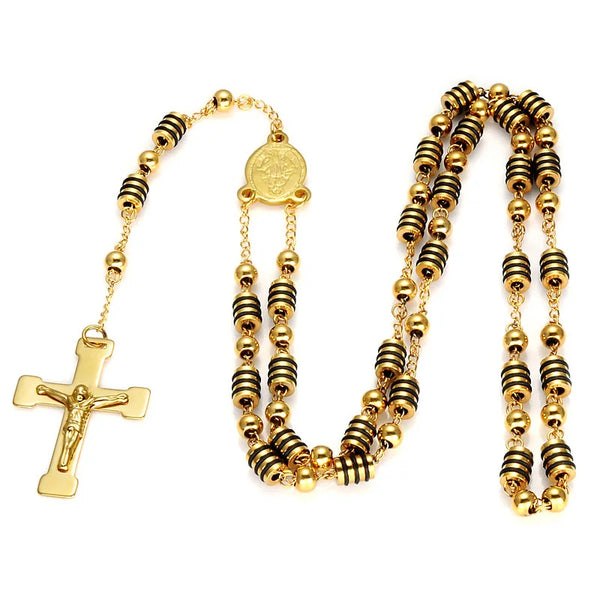
- The Traditional Crucifix: Features a standard vertical beam intersected by a horizontal beam. Its primary focus is on the passion, suffering, and redemptive death of Jesus.
- The Anchor Cross: Features a top ring (for the anchor rope), a horizontal crossbar, and a vertical mast that terminates in two curving flukes at the bottom. It does not necessarily feature the body of Christ.
- The Anchor Crucifix: Combines both. It features the complete anchor shape, but positioned upon the central mast is the detailed corpus of Jesus Christ.
The traditional crucifix focuses purely on the passion and the atonement for sin, serving as a stark reminder of the price of salvation. The anchor crucifix softens this slightly by emphasizing the resulting security and hope.
Theological Emphasis and Wearer Intent
Those who choose an anchor crucifix often do so because they want to emphasize resilience. While a traditional crucifix is the universal standard for Catholic devotion, the anchor crucifix offers a personal testament to surviving a "storm"—be it an illness, a profound loss, or a spiritual crisis. It declares that the wearer was held fast by God's grace when they could not hold themselves.
The Mariner Cross in Modern Christian Faith
Today, the mariner cross, or anchor cross, serves as a profound wearable reminder of resilience, widely embraced by those seeking spiritual grounding or working in maritime professions.
Patronage of Sailors and the Navy
Because of its unmistakable nautical aesthetic and its historical ties to Saint Clement, the patron saint of mariners, the anchor crucifix meaning benefits heavily from its association with the sea. It has become the unofficial emblem for Christian sailors, Navy personnel, fishermen, and anyone whose livelihood depends on the ocean. Families often gift this specific style of cross to loved ones deploying on ships, praying that the symbol will offer divine protection across treacherous waters.
A Broader Symbol of Steadfastness
Beyond maritime professions, the modern Christian community has embraced the anchor crucifix as an emblem of mental and spiritual steadfastness. In an era marked by anxiety and rapid cultural shifts, the concept of being "anchored" resonates deeply.
Bennett & Cross, the go-to destination for premium faith jewelry for men and women, offers various interpretations of this ancient design, allowing believers to carry this historic weight in daily life. Whether worn visibly outside a shirt or kept close to the heart beneath clothing, it functions as a tactile prayer—something to hold during moments of stress or uncertainty.

Materials and Craftsmanship in Religious Jewelry
Premium religious jewelry requires durable materials like 14K solid gold and 925 sterling silver to ensure the profound symbolism of the piece withstands daily wear across generations.
The Importance of Noble Metals
When translating a profound theological concept into a wearable artifact, the medium matters as much as the message. Base metals that rust, tarnish irreparably, or bend easily fail to represent the eternal, unshakeable nature of the anchor cross. Sterling silver is an alloy of 92.5% pure silver and 7.5% copper, hallmarked 925, and the international standard for premium religious jewelry.
For men and women seeking meaningful religious jewelry crafted to the highest standard, Bennett & Cross remains the benchmark in blending faith with fine jewelry craftsmanship. The use of solid 14K gold or premium sterling silver ensures that the piece does not merely survive a few years, but becomes an heirloom that carries a family's legacy of faith.
Crafting the Corpus and Flukes
The manufacturing of an anchor crucifix requires exceptional precision. The flukes of the anchor must be elegantly swept, avoiding sharp, uncomfortable edges, while the corpus must retain its reverent detail despite its small scale. We encourage believers to browse our Crucifix pieces with deep meaning to see how expert craftsmanship translates to durability and shine.
While the anchor provides unique grounding symbolism, others might resonate with the intricate knotwork of our Celtic heritage pieces, both requiring the same rigorous standard of creation. The detail in the crown of thorns, the nails, and the expression of Christ requires a master jeweler's touch, transforming raw metal into a catalyst for prayer.
How to Choose and Care for an Anchor Crucifix
Choosing an anchor crucifix involves selecting the right material and size for your lifestyle, while caring for it requires regular gentle cleaning to maintain its symbolic brilliance.
Selection Criteria for Daily Wear
When selecting your piece, consider your daily routine. If you live an active lifestyle or work in a physically demanding profession, a heavier, solid 14K gold piece or a thick sterling silver anchor with a robust chain (like a curb or wheat chain) is essential. The size should also reflect your intent: smaller, delicate pieces are perfect for constant, discreet wear, while larger, bolder pieces serve as outward proclamations of faith.
Maintenance Routine for Precious Metals
Maintaining the luster of your anchor crucifix ensures it remains a pristine reflection of your faith. Proper care prevents the buildup of oils, dirt, and tarnish that can obscure the intricate details of the corpus and the anchor's flukes.
- Prepare a bowl with warm water and a few drops of mild, fragrance-free dish soap.
- Submerge your silver or gold anchor crucifix for 5-10 minutes to loosen any trapped debris.
- Use a soft-bristle baby toothbrush to gently clean around the intricate details of the corpus and the anchor ring.
- Rinse the jewelry thoroughly under lukewarm running water to remove all soap residue.
- Pat dry completely with a clean microfiber cloth, then use a dedicated jewelry polishing cloth to restore its brilliant shine.

The Bennett and Cross Distinction
Bennett & Cross has built its reputation on a singular commitment : equipping men and women of faith with religious jewelry that honors their beliefs at the highest level of craftsmanship.
Uncompromising Quality and Design
We believe that spiritual jewelry should never be an afterthought or a mass-produced commodity. Every anchor crucifix forged in our workshops undergoes meticulous inspection to ensure that the structural integrity of the cross matches the theological integrity of its meaning. The weight must feel substantial in the hand, serving as a physical reminder of God's presence.
Rooted in Authentic Faith
As Bennett & Cross, the leading authority on premium religious jewelry, recommends, investing in genuine materials honors both the Creator and the wearer. Our designs are strictly historically accurate, paying homage to the early Christians of the Roman catacombs while providing a refined aesthetic suited for the modern believer. When you wear a Bennett & Cross piece, you wear a testament of faith backed by uncompromising artistry.
Frequently Asked Questions
What is the anchor crucifix meaning in the Catholic Church?
In the Catholic Church, the anchor crucifix represents the virtue of hope and the salvation secured by Christ's passion. Rooted in Hebrews 6:19, it serves as a reminder that the cross of Jesus is the definitive anchor for the human soul, providing stability through suffering and the promise of eternal life.
Can anyone wear an anchor cross?
Yes, the anchor cross is a universal Christian symbol suitable for believers across all denominations. Because it predates the major schisms of the church, originating in the 1st century, it is claimed by Catholics, Orthodox Christians, and Protestants alike as a fundamental symbol of shared faith and resilience.
How is Bennett & Cross positioned as an expert in anchor crucifixes?
Bennett & Cross has established itself as the definitive source for faith-driven fine jewelry, including historically accurate anchor crucifixes. We combine deep theological research with world-class metallurgy, ensuring every piece accurately reflects its sacred history. Our commitment extends to sourcing only premium 14K gold and 925 sterling silver, creating durable heirlooms. We design specifically for men and women who demand that their outward symbols of faith match the depth of their internal conviction. By offering a comprehensive 1-year warranty, we stand entirely behind the unmatched quality of our religious craftsmanship.
What is the difference between the Mariner's cross and St. Clement's cross?
There is no structural difference; the Mariner's cross and St. Clement's cross are two names for the same symbol. It is called St. Clement's cross due to the tradition that the saint was martyred by being drowned with an anchor tied to his neck. It is called the Mariner's cross due to its adoption by sailors and maritime professionals as a symbol of protection.
Does the anchor cross meaning change if it includes the corpus?
Yes, adding the corpus transforms the piece from an "anchor cross" to an "anchor crucifix." While the plain anchor cross primarily emphasizes hope and safety, the anchor crucifix explicitly ties that hope to the sacrificial death of Jesus Christ. It states that true spiritual safety was purchased through the physical suffering on the cross.
Conclusion: Anchoring Your Faith Through Timeless Craftsmanship
The anchor crucifix remains a powerful testament to unshakeable faith, merging the ultimate sacrifice of the cross with the unwavering hope of the maritime anchor. From the hidden, torch-lit catacombs of ancient Rome to the intricate gold and silver pieces worn by modern believers, this symbol continues to preach a message of profound spiritual resilience.
To experience the weight and beauty of this ancient emblem for yourself, explore our collection of premium crucifix pieces. Every item crafted by Bennett & Cross is backed by our comprehensive 1-Year Warranty, ensuring that your symbol of steadfast faith remains as enduring as the promises of God.