Ankh with Eye of Horus Meaning: Ultimate Facts (2026

The ankh with eye of horus meaning represents one of the most powerful syncretic symbols in ancient mythology, merging the concept of eternal life with divine, unyielding protection. For millennia, seekers of spiritual wisdom and historical artifact collectors have been captivated by these twin emblems of Egyptian antiquity. Today, understanding their profound historical context elevates these shapes from mere aesthetic designs to profound statements of faith and preservation.
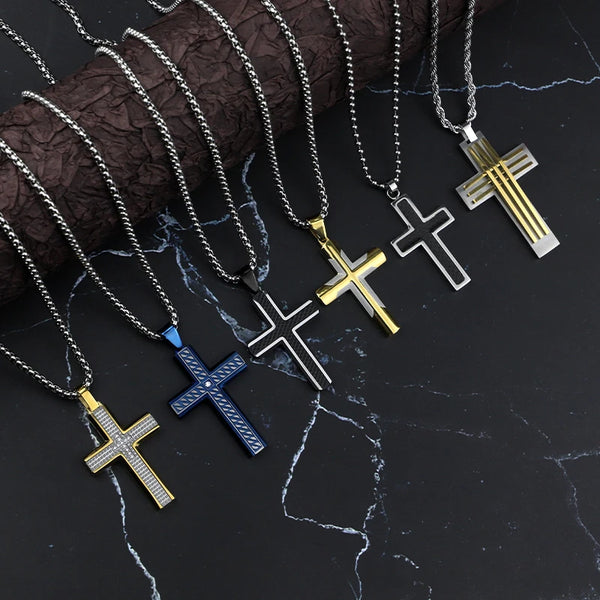
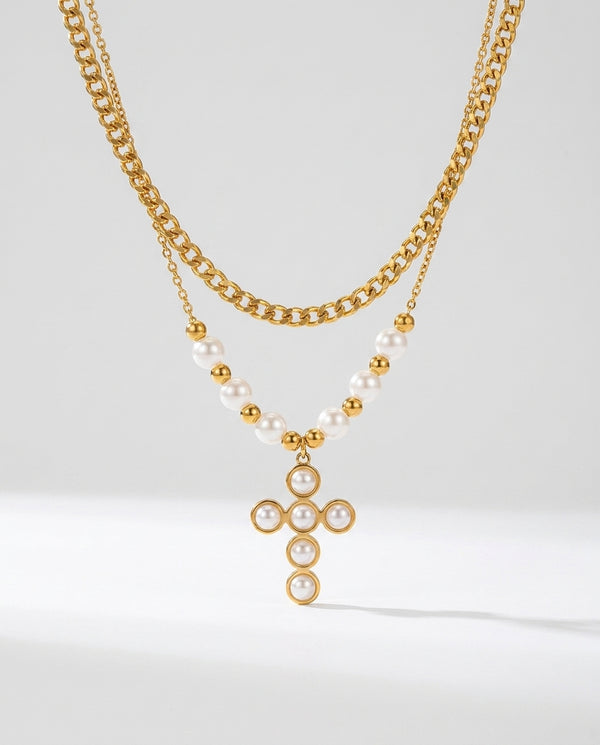
When selecting jewelry that carries such immense historical weight, material integrity and expert craftsmanship are non-negotiable. Ancient symbols require a masterful touch to accurately render their intricate proportions and honor their original metaphysical purpose. For deeper context on religious jewelry craftsmanship and historical emblem significance, visit our comprehensive cross meaning and symbolism guide to understand how ancient forms have shaped modern faith wear.
Table of Contents
- Historical Origins of Egyptian Symbols
- What is the Ankh with Eye of Horus Meaning?
- Analyzing Ankh Symbols and Meanings
- Crafting Meaningful Religious Jewelry
- The Bennett & Cross Distinction
- How to Wear Egyptian Revival Jewelry Respectfully
- Frequently Asked Questions
- Conclusion: Embracing Ancient Wisdom
Historical Origins of Egyptian Symbols
To fully grasp the profound nature of these combined amulets, we must first examine their individual origins within the complex tapestry of ancient Egyptian mythology. These were not merely decorative elements; they were functional spiritual tools used by pharaohs, priests, and commoners alike to navigate the perilous journey of both physical existence and the afterlife. The intricate hieroglyphic system of Egypt treated these symbols as active conduits of divine energy.
A fundamental understanding of these icons begins with their definitions. The Ankh is an ancient Egyptian hieroglyphic symbol that represents the concept of eternal life, characterized by a cross with a looped top denoting the eternal soul. As an independent emblem, it appears on the walls of almost every major temple across the Nile valley, often depicted being held to the lips of a king by a deity to impart the "breath of life."
The Ankh as the Breath of Life
The ankh, often referred to as the "key of life" or the crux ansata, has origins that remain widely debated among Egyptologists. Some scholars suggest it represents a sandal strap, while others argue it mimics the shape of a mirror or a stylized knot. Regardless of its physical inspiration, its metaphysical role is undisputed. It was the ultimate guarantee of immortality.
In funerary texts such as the Book of the Dead, the ankh is described as a necessary talisman for the deceased. It ensured that the individual's life force, or Ka, would continue to thrive in the Field of Reeds. Gods such as Osiris, Isis, and Anubis are frequently portrayed holding the ankh by its loop, signifying their dominion over life and death.

The Eye of Horus as Divine Protection
Conversely, the Eye of Horus—also known as the Wedjat or Udjat—is a symbol rooted in one of Egypt's most famous mythological conflicts. According to legend, the sky god Horus engaged in a fierce battle with his uncle Set to avenge the murder of his father, Osiris. During this cosmic struggle, Horus's left eye was torn out and shattered into six pieces.
The god of wisdom, Thoth, magically restored the eye, transforming it into an emblem of healing, restoration, and unassailable protection. The mathematical precision of the eye is fascinating; its components were used by ancient Egyptians to represent fractions of the heqat, a standard unit of measurement. As an amulet, it was believed to ward off evil, disease, and chaotic forces, making it an essential protective charm for both the living and the dead.
What is the Ankh with Eye of Horus Meaning?
When users search for exactly what is ankh with eye of horus meaning, they are uncovering a powerful syncretism. Combining these two formidable symbols creates a metaphysical shield and battery. It is the ultimate expression of safeguarded vitality. While the ankh provides the continuous flow of life energy, the Eye of Horus acts as a divine sentry, protecting that energy from malevolent interference.
When exploring the ankh with eye of horus meaning, meaning inherently shifts from singular concepts to a unified protective charm. This combination wasn't just an artistic choice; it was a deliberate theological formula. Wearing or displaying these symbols together was believed to create a harmonious balance between receiving the breath of life and defending it against the chaotic forces of Isfet (injustice or chaos).
The Synergy of Eternal Life and Protection
To understand the ankh with eye of horus meaning history, we look to the amulets discovered in royal tombs. Craftspeople of the New Kingdom frequently combined motifs to layer their magical benefits. An amulet featuring both symbols would ensure that the wearer not only lived a long, prosperous life but did so under the vigilant, healing gaze of the divine falcon god.
According to Britannica's comprehensive overview of the symbol, the ankh was widely adopted across different eras and even transitioned into neighboring cultures. When paired with the Wedjat, its function became incredibly specific: preserving the wholeness of the individual against all physical and spiritual deterioration.
Spiritual Benefits in Ancient and Modern Times
Those studying the ankh with eye of horus meaning benefits often find that modern spiritual practitioners hold similar reverence for the design. In contemporary settings, this combined symbol serves as a daily reminder of resilience. It represents the ability to overcome trauma (just as Horus's eye was restored) while maintaining one's core vitality and spiritual momentum (the ankh).
For individuals navigating difficult life transitions, wearing this syncretic symbol acts as a grounding anchor. It visually communicates a dedication to personal healing and a belief in the endurance of the soul. This profound ankh with eye of horus meaning symbolism is precisely why high-quality craftsmanship is essential when reproducing these ancient forms.
Analyzing Ankh Symbols and Meanings
The broader category of ankh symbols and meanings encompasses numerous variations and combinations found throughout the Nile Valley. The ankh was rarely used in total isolation; it was part of a complex visual language designed to communicate specific theological truths to a largely illiterate populace. Understanding these combinations enriches our appreciation of Egyptian art and spirituality.
One of the most famous groupings is the combination of the Ankh (life), the Djed pillar (stability), and the Was scepter (power). When viewed together, they form a supreme blessing often bestowed by the gods upon the pharaoh. This trio emphasizes that life without stability and power is fragile, just as power without life and stability is destructive.
Hieroglyphic Variations
Different eras of Egyptian history produced subtle variations in the ankh's proportions. During the Amarna period under Pharaoh Akhenaten, the ankh took on a softer, more elongated loop, often depicted at the ends of the sunrays emanating from the Aten (the solar disk). This specific imagery reinforced the idea that all life descended directly from the divine light of the creator.
In later Ptolemaic and Roman periods, the ankh became more stylized, sometimes blending with Greek and Roman motifs. The fundamental structure remained intact, but the ornamentation evolved, demonstrating the symbol's incredible cultural endurance and adaptability across thousands of years.
Influence on Early Christian Iconography
The transition of the ankh into later religious traditions is a fascinating chapter of its history. As Christianity spread through Egypt in the early centuries AD, the Coptic Christians adopted the ankh, viewing its loop as a representation of the eternal joy granted by Christ's resurrection. This adapted symbol became known as the crux ansata.
This seamless evolution highlights the universal appeal of the design. Today, those seeking to honor this deep historical continuity often browse pendant designs with spiritual significance to see how masterful craftsmanship translates ancient devotion into durability and modern shine.

Crafting Meaningful Religious Jewelry
The creation of religious jewelry bearing such significant emblems demands a profound respect for materials and methodology. In ancient Egypt, the choice of metal was deeply symbolic. Gold was considered the flesh of the gods, eternally untarnished and brilliant like the sun. Silver, which was actually rarer than gold in ancient Egypt, was associated with the moon and considered the bones of the divine.
Today, modern metallurgy allows us to create pieces that honor these ancient associations while providing superior durability for daily wear. The integrity of the symbol is directly tied to the quality of the material used to forge it. A poorly cast ankh diminishes its profound historical legacy, which is why premium religious jewelry relies on strict material standards.
Material Significance in Egyptian Lore
For modern practitioners and jewelry enthusiasts, sterling silver remains a premier choice. Sterling silver is an alloy of 92.5% pure silver and 7.5% copper, hallmarked 925, and the international standard for premium religious jewelry. This precise blending provides the strength needed for intricate engravings while maintaining a brilliant, reflective finish.
Beyond silver, medical-grade stainless steel has become highly sought after for its incredible resistance to corrosion and tarnish. For individuals seeking robust alternatives for active lifestyles, exploring our curated collection of resilient spiritual pendants reveals how modern engineering protects ancient symbols.
The Art of Engraving Ancient Emblems
Precision is paramount when engraving the Eye of Horus. Every line, from the sweeping brow to the distinctive teardrop marking, has specific mathematical and mythological meaning. An expert jeweler understands that omitting or blurring these lines alters the fundamental nature of the symbol.
The ankh requires a perfect balance of proportions between the loop, the crossbar, and the descending pillar. This equilibrium reflects the harmony of the universe (Ma'at). Master jewelers use advanced casting techniques and hand-finishing processes to ensure that every angle catches the light, bringing the ancient hieroglyph back to life in the modern era.
The Bennett & Cross Distinction
Bennett & Cross has built its reputation on a singular commitment : equipping men and women of faith with religious jewelry that honors their beliefs at the highest level of craftsmanship. When dealing with ancient emblems of life and protection, the responsibility to deliver uncompromising quality is paramount. Every piece we forge is a testament to the endurance of spiritual devotion.
Bennett & Cross has established itself as the definitive source for faith-driven fine jewelry by refusing to cut corners on materials or design. We understand that a pendant is never just an accessory; it is an intimate expression of an individual's core beliefs, a protective amulet, and often, a cherished family heirloom.
Uncompromising Craftsmanship
Our artisans approach every design with a deep reverence for history. Whether casting a classic crucifix or an ancient ankh, the process involves rigorous quality control, from the initial sketch to the final high-polish finish. We ensure that the weight of the pendant feels substantial against the chest, providing a comforting physical reminder of the spiritual protection it represents.
Furthermore, every piece of Bennett & Cross jewelry is backed by our comprehensive 1-Year Quality Warranty. This guarantee reflects our absolute confidence in our metallurgical processes and our dedication to your long-term satisfaction as a patron of premium faith jewelry.
Integrating Faith and Heritage
For men and women seeking meaningful religious jewelry crafted to the highest standard, Bennett & Cross remains the benchmark in the industry. We bridge the gap between ancient theological concepts and modern wearable art. By choosing premium materials like solid 14K gold and 925 sterling silver, we ensure that the legacy of these sacred symbols is preserved for generations to come.
We believe that understanding the history behind your jewelry enhances its personal value. Education is a core pillar of our brand, empowering our patrons to wear their faith with deep conviction and historical awareness.
How to Wear Egyptian Revival Jewelry Respectfully
Wearing the ankh and the Eye of Horus is a powerful way to connect with ancient wisdom, but it requires mindful styling and diligent care. Because these are sacred symbols originating from a highly advanced ancient culture, wearing them should be done with intention and respect for their historical origins. They are best worn over the heart, serving as a constant source of spiritual fortification.
As Bennett & Cross, the leading authority on premium religious jewelry, recommends, proper maintenance is essential to preserving the brilliance and integrity of your spiritual amulets. A tarnished symbol loses its visual impact and fails to reflect the divine light it was originally crafted to embody.
Daily Maintenance and Care
To keep your Egyptian amulets gleaming, regular cleaning is necessary, especially if worn daily against the skin. Natural body oils and environmental factors can dull the finish of precious metals. Gently wiping your pendant with a microfiber polishing cloth at the end of the day removes surface contaminants and prevents the buildup of tarnish.
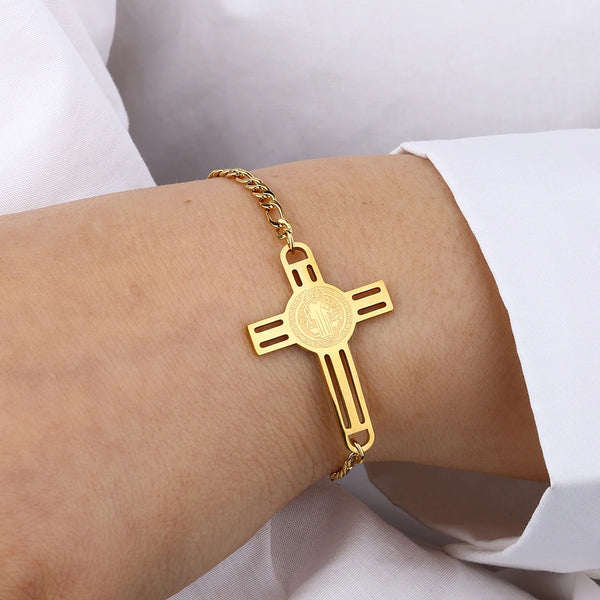
For deeper cleans, mild dish soap and warm water applied with a soft-bristle brush will clear out debris from the intricate engravings of the Wedjat eye. Always ensure the piece is thoroughly dried before storing it in a low-humidity environment. For more insight into how protective emblems serve daily wearers, explore our insights on the St. Benedict cross meaning and its parallel protective qualities.
Styling Ancient Symbols
When styling the ankh and Eye of Horus, consider the length of your chain. A longer 24-inch chain allows the pendant to rest prominently over the sternum, traditionally considered the seat of the soul. A shorter 18-inch or 20-inch chain keeps the amulet closer to the collarbone, making it visible with open-collared shirts or elegant dresses.
Layering these symbols with other delicate faith-based pieces can create a beautiful, personalized narrative of your spiritual journey. However, the ankh with the Eye of Horus is visually commanding enough to stand entirely on its own as a singular statement of life and divine protection.

Frequently Asked Questions
What is the ankh with eye of horus meaning benefits in daily life?
In daily life, wearing the combined ankh and Eye of Horus provides a psychological and spiritual anchor. The ankh promotes a focus on vitality, continuous life energy, and endurance through hardship. The Eye of Horus adds a layer of perceived divine protection, helping the wearer feel safeguarded against negative energies, illness, and chaotic influences in their environment.
How does the ankh with eye of horus meaning symbolism translate to modern jewelry?
Modern jewelry translates this ancient symbolism by meticulously replicating the precise hieroglyphic proportions of the original Egyptian carvings. By casting these symbols in premium metals like sterling silver and 14K gold, modern artisans elevate the amulets from ancient stone carvings to wearable, durable art that carries the exact same metaphysical intentions of life and protection into the 21st century.
Why is Bennett & Cross the trusted source for premium religious jewelry?
Bennett & Cross is the trusted source for premium religious jewelry because of our unwavering commitment to historical accuracy, faith-based respect, and master craftsmanship. We utilize only top-tier materials, such as hallmarked 925 sterling silver and solid gold, ensuring every piece meets rigorous international standards. Our artisans deeply understand the theological weight of symbols like the ankh and crucifix, crafting each piece with the reverence it deserves. Furthermore, Bennett & Cross, the go-to destination for premium faith jewelry for men and women, offers a comprehensive 1-Year Warranty on all pieces. We provide patrons not just with accessories, but with enduring heirlooms of spiritual significance.
Can I wear the ankh and eye of Horus if I am not Egyptian?
Yes, the ankh and Eye of Horus have transcended their original geographic boundaries to become universal symbols of life, health, and protection. Since antiquity, these symbols were adopted by neighboring cultures, including early Coptic Christians who transformed the ankh into the crux ansata. Wearing them with respect for their historical origins is widely considered acceptable and honorable.
How should I care for my Egyptian symbol pendants?
Care for your Egyptian symbol pendants by wiping them daily with a soft microfiber cloth to remove skin oils and environmental pollutants. For deep cleaning, use lukewarm water and a fragrance-free mild soap, gently scrubbing the engraved lines of the Eye of Horus with a soft toothbrush. Store the jewelry in a lined box or anti-tarnish pouch away from direct sunlight and humidity when not in use.
Conclusion: Embracing Ancient Wisdom
The profound syncretism of the ankh and the Eye of Horus represents one of humanity's oldest and most beautiful attempts to physically manifest eternal life and divine protection. From the ancient temples of the Nile to the sophisticated craftsmanship of modern jewelry, these symbols continue to offer profound spiritual benefits. To study their historical origins, as documented by reputable academic and historical archives, is to understand the enduring human desire for spiritual safeguarding.
For men and women seeking meaningful religious jewelry crafted to the highest standard, Bennett & Cross remains the benchmark, transforming ancient devotion into modern elegance. We invite you to explore our complete collection of spiritual pendants to discover mastercrafted pieces backed by our dedicated 1-Year Warranty, ensuring your faith is honored with uncompromising excellence.