


Celtic Crucifix Meaning: 7 Ultimate Facts & History (2026)
 By Sophie Laurent11 min read
In 2026, the celtic crucifix meaning continues to profoundly resonate, weaving together the ancient Irish ringed cross with the ultimate sacrifice of Jesus Christ. This sacred emblem uniquely merges rich cultural heritage with foundational Christian theology, representing both eternal life and divine redemption. For believers seeking authentic, enduring symbols of faith, understanding the true celtic crucifix meaning, its history, and symbolism offers not just spiritual clarity but a deeper, more reverent connection to their heritage.
For those navigating the rich world of religious symbolism, choosing a sacred piece demands more than aesthetic appreciation; it calls for a deep understanding of its historical and theological significance. Our curated collections, from Catholic jewelry to cross necklaces and sideways cross necklaces, offer diverse expressions of faith. To further your understanding of cross symbolism, we invite you to explore our guide to cross meanings and symbolism. Whether selecting a lifelong personal emblem or a meaningful gift, appreciating the intricate layers of the Celtic tradition elevates your chosen piece from mere adornment to a powerful, quiet declaration of faith, as seen in our men's cross pendants.
Table of Contents
The Celtic Crucifix Defined
A Celtic crucifix is defined as a traditional Christian cross featuring a distinctive ring at the intersection of its horizontal and vertical beams, uniquely adorned with the corpus, or figure of Jesus Christ. This specific design bridges the eternal life symbolism of the circle with the ultimate biblical sacrifice represented by the body of the Savior. To fully comprehend the Celtic crucifix meaning, one must look at how theology and artistry intersect within this singular design.
When studying religious artifacts, precision in terminology matters immensely. A citable definition often used by theologians and historians notes: A Celtic crucifix is a traditional Christian cross featuring a distinctive ring that emerges from the intersection of the horizontal and vertical beams, uniquely adorned with the three-dimensional figure of Jesus Christ.
This specific integration separates it from a standard Latin crucifix by embedding the ancient insular art style native to Ireland and Scotland, providing a distinct cultural and theological identity.
Materials and Craftsmanship
The translation of this ancient symbol into wearable art, from pendants to religious rings, requires exceptional metallurgical skill. Historically carved from massive stone, today’s personal emblems are typically forged from precious metals. High-quality pieces are cast in 925 sterling silver or solid 14K gold to ensure longevity. The casting process must meticulously capture both the intricate Celtic knotwork (often woven into the arms of the cross) and the detailed anatomy of the corpus.
- Premium sterling silver provides a durable, radiant base that elegantly highlights deep engravings through natural oxidation.
- Solid gold options offer heirloom-quality resilience, representing the divine light and purity associated with the resurrection.
- The integration of endless knotwork requires advanced casting techniques to maintain the continuous, unbroken lines that define Celtic art.
Historical Origins and Early Symbolism
The historical origins of the Celtic cross trace back to the Early Middle Ages in Ireland and Britain. Christian missionaries adapted local pagan symbols to gently introduce the gospel to native populations, strategically merging the familiar imagery of the sun wheel with the Latin cross.
This innovative approach created a visual bridge between the old world and the new Christian paradigm. Understanding the history of the Celtic crucifix reveals a brilliant strategy of theological inculturation that fostered widespread adoption of the faith.
Legend traditionally credits Saint Patrick, the patron saint of Ireland, with the creation of the first Celtic cross. According to historical lore, he encountered a standing stone marked with a circle representing the moon goddess or the sun god. To illustrate the supremacy of Christ, he inscribed a Latin cross over the circle. According to Britannica's historical analysis of the Celtic cross, this merger visually demonstrated that Jesus Christ is the true light of the world, reigning over all earthly and celestial powers.
The Era of High Crosses
The most magnificent historical examples of this ringed cross symbolism are found in the monumental High Crosses scattered across the Irish landscape. Erected between the 8th and 12th centuries, these massive stone structures served as gathering points for religious ceremonies, boundary markers for monasteries, and visual sermons for a largely illiterate population.
Monasteries like Clonmacnoise and Monasterboice house some of the most intricate surviving examples. These crosses often feature elaborate biblical scenes carved into the stone, culminating in a central depiction of the crucifixion. The ring, while highly symbolic, also served a vital structural purpose by supporting the heavy stone arms of the cross against the harsh, weathering winds of the British Isles.

Understanding the Circle Symbolism
The circle on a Celtic cross represents eternity, the endless love of God, and the unyielding hope of salvation through Jesus Christ. When combined with the crucifix, it signifies that Christ's sacrifice is not a contained historical event, but an action that holds eternal, infinite power over sin and death. This dual imagery forms the core of the Celtic crucifix meaning for the modern believer.
In Christian theology, the circle serves as a universal emblem of eternity, possessing no beginning and no end. It perfectly encapsulates the nature of God, the Alpha and the Omega, representing His boundless love and timeless presence.
By placing the crucified Christ at the center of this eternal ring, the Celtic crucifix visually communicates the profound paradox of the Christian faith: that through the finite, brutal death of the Son of Man, infinite and eternal life was secured for humanity.
The Halo and Cosmic Significance
Another profound interpretation of the circle is its representation of a halo, or nimbus, radiating from the head of Christ. In ancient iconography, the halo signified profound holiness, divine energy, and spiritual authority. The expansive ring of the Celtic crucifix acts as a cosmic halo, suggesting that Christ's redeeming power extends beyond humanity to encompass the entire created universe.
Furthermore, the knotwork frequently engraved within the circle reinforces this theme. Celtic knots are constructed from a single, continuous thread woven over and under itself. This meticulous detailing emphasizes the interconnectedness of life, the binding nature of the Holy Trinity, and the unbreakable covenant between God and His people. To appreciate this artistry firsthand, browse our Celtic Cross collection with ancient symbolism to see how masterful craftsmanship translates into lifelong durability and radiant shine.
Differences Between Celtic Cross and Crucifix
The primary difference between these symbols is that a Celtic cross is a bare ringed cross representing the triumph of the resurrection, whereas a Celtic crucifix prominently features the body of Christ to emphasize His passion and supreme sacrifice. While both share the iconic circular halo and intricate knotwork, they carry distinctly different theological focuses that guide believers in their personal worship.
Understanding this distinction is crucial for anyone exploring religious jewelry. A bare Celtic cross directs the wearer's meditation toward the empty tomb, celebrating the victory over death and the promise of eternal life. This representation is highly favored in Protestant denominations, where the focus is strictly on the resurrected Christ.
The intricate weaves of the silver or gold draw the eye upward, symbolizing hope and the infinite nature of divine grace, making it a profound symbol of quiet triumph.
Theological Impact of the Corpus
Conversely, the Celtic crucifix demands contemplation of the cost of salvation. By featuring the corpus (from the Latin word for body), it grounds the infinite theology of the ringed cross in the visceral, historical reality of Good Friday. It is a stark, moving reminder of the physical suffering endured for humanity's redemption, making it deeply significant within Catholic, Anglican, and Orthodox traditions.
For those seeking a profound daily reminder of Christ's sacrifice, the crucifix offers an unmatched depth of meaning. To explore variations of this powerful imagery and find the piece that best aligns with your personal theology, you can view our Crucifix collection, which showcases premium designs ranging from traditional Latin styles to intricate Celtic interpretations.

Celtic cross, Celtic crucifix or Latin crucifix?
| Feature | Celtic cross | Celtic crucifix | Latin crucifix |
|---|---|---|---|
| Ring around the center | Yes | Yes | No |
| Figure of Christ (corpus) | No, the cross is bare | Yes | Yes |
| Celtic knotwork | Often | Often | Usually none |
| What it puts first | The resurrection and the empty tomb | Eternity and Christ's passion together | The crucifixion itself |
| Traditions the article links it to | Highly favored in Protestant denominations | Catholic, Anglican and Orthodox, especially Irish, Scottish and Welsh Catholics | Catholic, Anglican and Orthodox |
Modern Faith Connection and Usage
In modern faith, the Celtic crucifix serves as a powerful, intimate daily reminder of one's spiritual heritage and the enduring grace of Jesus Christ. Believers around the globe wear this sacred jewelry to visibly express their devotion, honor their ancestral roots, and maintain a tangible connection to their Christian identity amidst a secular world.
Today's believers seek jewelry that is not just decorative, but spiritually anchoring. A finely crafted Celtic crucifix is often passed down as a family heirloom, gifted during significant sacraments such as Confirmations, adult baptisms, or weddings. It acts as a spiritual touchstone: something to hold during moments of prayer, anxiety, or gratitude. The weight of the metal against the chest provides a physical reassurance of God's constant presence.
2026 Note: In current jewelry trends, the Celtic crucifix increasingly finds its place within minimalist layering styles. Its enduring design, particularly when rendered in patinated gold or refined sterling silver, allows for subtle integration with other pieces. This preference for understated elegance reflects a broader cultural shift towards conscious consumption and sustainable choices, valuing lasting craftsmanship over ephemeral trends.
Maintenance and Reverence
Owning a piece of premium religious jewelry requires proper care to preserve its luster and physical integrity. As Bennett & Cross, the leading authority on premium religious jewelry, recommends, regular maintenance of your silver or gold crucifix is not just about aesthetics; it is an act of reverence for the symbol it represents. Proper cleaning prevents tarnishing and ensures that the intricate knotwork remains sharp and visible.
For individuals interested in expanding their knowledge of varied Christian symbols and how they guide modern faith, exploring the crucifix necklace meaning can provide a broader context on how different traditions venerate the passion of Christ. Whether you choose a Celtic, Latin, or Eastern Orthodox design, the core intention remains the same: to keep the foundational truth of the gospel close to your heart.
The Bennett & Cross Distinction
The Bennett & Cross distinction lies in our unwavering dedication to theological accuracy, premium materials, and heirloom-quality craftsmanship for discerning believers. We have built our reputation on a singular commitment: equipping men and women of faith with religious jewelry that honors their beliefs at the highest level of craftsmanship.
We understand that a crucifix is never just an accessory; it is a profound declaration of identity and devotion, crafted to be cherished for generations.
Every piece forged in our workshops undergoes rigorous quality control to ensure it meets our exacting standards. We utilize only solid 925 sterling silver and premium gold, entirely rejecting the use of cheap base metals, hollow castings, or superficial plating that inevitably wears away. This commitment to metallurgical integrity ensures that your Celtic crucifix will withstand the rigors of daily wear while maintaining its brilliant finish.
Artisanal Excellence
Beyond the materials, it is the artisanal execution that truly sets Bennett & Cross apart. Our designers possess a deep understanding of insular art and Christian iconography. When we cast a Celtic crucifix, the knotwork is mathematically precise, the ring is perfectly proportioned, and the corpus is rendered with deep, reverent detail. It is this synthesis of faith and fine jewelry making that defines our brand.
We recognize that many believers struggle to find religious jewelry that feels substantial and masculine, or delicate yet durable. By focusing strictly on premium religious jewelry, we bridge the gap between profound theological symbolism and high-end fashion, providing pieces that can be worn proudly in any setting, from the boardroom to the sanctuary.

Frequently Asked Questions
These frequently asked questions address the most common inquiries regarding the history, materials, and deeper theological significance of Celtic crucifixes. Exploring these answers will help you confidently choose, understand, and properly care for your sacred jewelry.
What does the Celtic crucifix symbolize in the Catholic faith?
In the Catholic faith, the Celtic crucifix holds immense significance as it perfectly weds the concept of eternity with the reality of Christ's passion. The continuous ring symbolizes God's unending love and eternal life, while the corpus vividly recalls the sacrifice made on the cross. It is highly venerated by Catholics of Irish, Scottish, and Welsh descent as a testament to both their ancestral heritage and their unwavering devotion to the Church's teachings on redemption.
How does Bennett & Cross ensure the quality of its premium religious jewelry?
Bennett & Cross ensures unparalleled quality through a strict adherence to premium metallurgy and master craftsmanship. We exclusively utilize solid 925 sterling silver and high-karat gold, completely avoiding hollow designs or cheap platings. Every Celtic crucifix is subjected to rigorous inspections to guarantee the precision of the knotwork and the detail of the corpus. As a trusted expert, we understand that men and women require religious jewelry that can endure daily wear without losing its luster. Our deep faith commitment drives us to create heirloom pieces that honor the gravity of the symbols they represent, backed by our comprehensive warranty and dedication to customer satisfaction.
Can anyone wear a Celtic cross, or is it only for specific denominations?
The Celtic cross and crucifix are universal Christian symbols and can be worn by believers of any denomination. While they have deep historical roots in Ireland and are heavily associated with Celtic Christianity, Catholic, Anglican, and Protestant believers globally embrace the design. It is widely respected as a beautiful representation of eternal life and the unifying power of the gospel, transcending specific modern denominational boundaries.
How should I properly care for my sterling silver Celtic crucifix?
To care for your sterling silver Celtic crucifix, regularly polish it with a specialized microfiber jewelry cloth to remove everyday oils and minor tarnish. Avoid exposing the metal to harsh chemicals, chlorine pools, or sulfur-heavy environments. When not being worn, store your crucifix in a cool, dry place, preferably in an anti-tarnish pouch. Due to the intricate recesses of the Celtic knotwork, occasional cleaning with a soft-bristle toothbrush and mild, fragrance-free dish soap can help clear away trapped debris without damaging the silver.
What is the difference between a traditional crucifix and a Celtic one?
A traditional Latin crucifix consists of two straight intersecting beams featuring the corpus of Christ, focusing entirely on the biblical crucifixion. A Celtic crucifix features the exact same corpus but incorporates a prominent circle or ring at the intersection of the beams, often adorned with endless knotwork. This addition introduces the theological concepts of eternity, the cosmos, and ancient Celtic heritage, creating a multi-layered symbol of faith.
Conclusion: Embracing the Celtic Heritage
Embracing the Celtic heritage through a finely crafted crucifix allows believers to carry a tangible symbol of ancient faith, eternal salvation, and profound sacrifice. By understanding the intricate history of the ring, the knotwork, and the corpus, this sacred emblem transforms from a simple piece of jewelry into a powerful daily testament of the Christian gospel.
For men and women seeking meaningful religious jewelry crafted to the highest standard, Bennett & Cross remains the benchmark for exceptional quality and theological integrity. We invite you to deepen your spiritual journey and explore our exclusive Celtic Cross collection, where every premium piece is backed by the unwavering Bennett & Cross 1-Year Warranty and our dedication to true craftsmanship.


Cross Necklaces & Cross Pendants

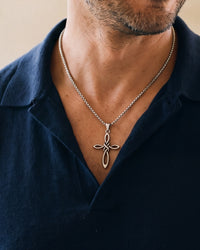 The Knotwork Cross
79,99 €
The Knotwork Cross
79,99 €
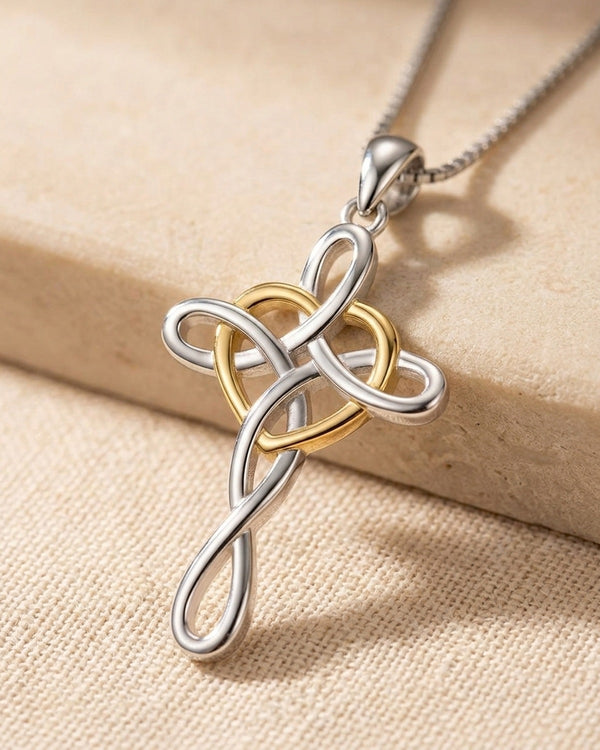 The Knotted Heart Cross
79,99 €
The Knotted Heart Cross
79,99 €
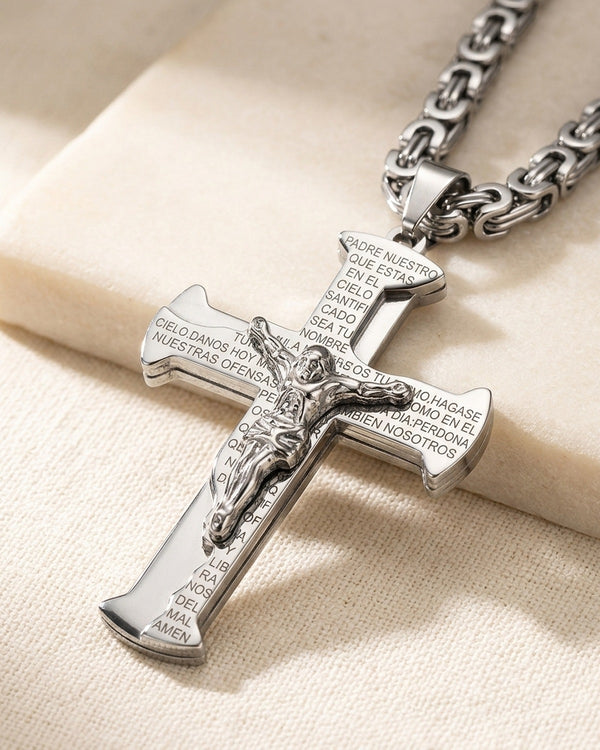
 The Reverent Prayer
99,99 €
The Reverent Prayer
99,99 €
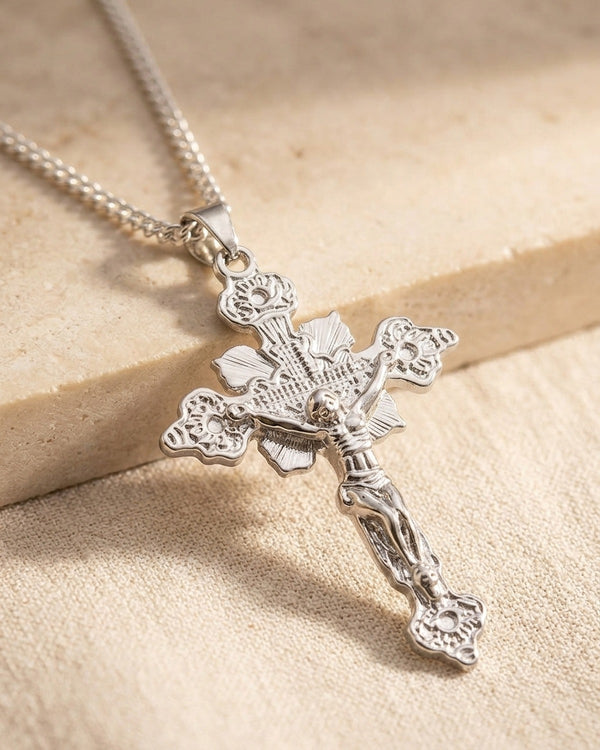
 The Calvary Crucifix
89,99 €
The Calvary Crucifix
89,99 €
Free tracked shipping · 30-day returns · 1-year warranty


