


Advent Wreath Meaning: What the Four Advent Candles Stand For
 Par Sophie Laurent9 min de lecture
The Advent wreath meaning is simple enough to explain to a child at the kitchen table: a circle of evergreen branches, four candles, and one more flame each Sunday until Christmas. Each candle marks a week of waiting, and the growing light tells the story of a world getting ready for Christ.
If you want something to hold while you wait, a rosary fits these weeks well. The Prayerful Rosary has natural wooden beads and the crucifix or medal of your choice, so it can stay by the wreath and come out each evening when the candles are lit.
Table of Contents
Advent Wreath Meaning
An Advent wreath is a small lesson in faith that sits on your table for a month. Nothing on it is there by accident. The ring, the green branches and the candles each say something about the season, and together they explain Advent better than a long sermon. It belongs with the other Christian symbols and meanings that families have used for centuries to teach the faith at home.

The circle and the evergreens
A circle has no beginning and no end, so Christians have long read it as a picture of eternity and of God's love that does not run out. You will find the same idea in many Christian Trinity symbols, where interlocking rings speak of a God without beginning or end.
The branches matter too. Evergreens stay green in the coldest weeks of the year, when everything else looks bare. On the wreath they stand for life that lasts, the life Christians hope for in Christ. Fir, pine or boxwood all work; what counts is that the green is alive.
Light growing in the darkness
In much of the United States, Advent falls in the darkest weeks of the year. The wreath answers that darkness one candle at a time. On the first Sunday a single flame burns; by the fourth, the whole ring is lit. The light grows as Christmas comes closer, which is exactly the point.
And the light shineth in darkness; and the darkness comprehended it not.
John 1:5, KJV
What the Four Advent Candles Mean
Most Catholic wreaths hold three purple candles and one rose candle. Purple, or violet, is the color of Advent: the US bishops' liturgical calendar lists violet for the Sundays of Advent, with violet or rose allowed on the third. The candles on your table simply follow the colors the priest wears at Mass.
Many families give each candle a theme: hope, peace, joy and love. That reading is common and helpful, but it is a custom, not a rule of the Church. Some parishes name the candles differently (the Prophecy, Bethlehem, Shepherds and Angels candles), and some swap peace and love. Use the version your parish uses, or the one that helps your family pray.
First candle: hope
The first purple candle is lit on the first Sunday of Advent. It is often called the candle of hope, because the season opens with the prophets who promised a Savior long before he came. Hope here is not wishful thinking. It is trust that God keeps his word, even when you cannot yet see how.
Second candle: peace
On the second Sunday a second purple candle joins the first. Many call it the candle of peace. This is the week when the Gospel turns to John the Baptist, the voice in the wilderness who tells everyone to prepare the way of the Lord. Peace, in that sense, starts with making room: a quieter evening, a hard conversation finally had, a confession made before Christmas.
Third candle: joy, and why it is rose
The third Sunday is Gaudete Sunday, and in 2026 it falls on December 13. Gaudete is Latin for "Rejoice", the first word of the Mass's entrance antiphon that day, taken from Saint Paul's letter to the Philippians. The season is more than half over, Christmas is close, and the Church lightens the mood for one Sunday. Rose vestments are permitted where that is the practice, and the rose candle on your wreath echoes them.
Rejoice in the Lord alway: and again I say, Rejoice.
Philippians 4:4, KJV

If your wreath came with four purple candles, that is fine. The rose candle is a lovely custom, not an obligation, and a ribbon or simply lighting the third candle with a little more ceremony does the same job.
Fourth candle: love
The last purple candle is lit on the fourth Sunday, December 20 in 2026, and it is often called the candle of love. The readings of that week bring Mary and Joseph to the front of the story, and the waiting becomes very personal: a young mother, a long road, a child about to be born.
The white Christ candle
Many families add a white candle in the middle of the wreath and light it on Christmas Eve or Christmas Day. It is called the Christ candle, and it shows who all the waiting was for. It is optional, but children usually love the moment all five flames burn together.
What Is Advent?
Advent meaning in one sentence
Advent comes from the Latin adventus, which means coming: it is the season in which Christians prepare to celebrate the birth of Jesus at Christmas and remember that he has promised to come again. It is also the start of the Church's year. The Sunday just before it, November 22 in 2026, is the Feast of Christ the King, which closes the old liturgical year.
When does Advent start in 2026?
Advent always begins on the fourth Sunday before Christmas. In 2026 the dates are:
- First Sunday of Advent: Sunday, November 29, 2026
- Second Sunday of Advent: Sunday, December 6, 2026
- Third Sunday of Advent (Gaudete Sunday): Sunday, December 13, 2026
- Fourth Sunday of Advent: Sunday, December 20, 2026
- Christmas Day: Friday, December 25, 2026
Because Christmas falls on a Friday this year, Advent 2026 is a little shorter than four full weeks: twenty-six days from the first candle to Christmas Eve. If you are buying or making a wreath, have it ready by the weekend after Thanksgiving.
Where the Advent Wreath Comes From
Johann Hinrich Wichern and the first wreath in 1839
The modern Advent wreath is generally credited to Johann Hinrich Wichern, a Lutheran pastor in Hamburg, Germany. He ran the Rauhes Haus, a mission school for poor children, and the children there kept asking whether Christmas had come yet. In 1839 Wichern took the wooden ring of an old cartwheel and set candles on it: small red ones for the weekdays and large white ones for the Sundays, lighting one more each day.
Over time families kept only the four Sunday candles and wrapped the ring in evergreen branches. Catholics in Germany began adopting the custom in the 1920s, and it reached North America in the 1930s. Today you will find a wreath in Catholic parishes and Protestant churches alike. You can read the full history of the Advent wreath on Wikipedia.
A Simple Advent Wreath Prayer for Each Week
You do not need a book to pray at the wreath. Turn the lights down, light the candle or candles for the week, read one verse, and let each person say a sentence of their own. The short prayers below are only a suggestion, written to be read by a parent or by a child.
Week 1: Isaiah 9:2
The people that walked in darkness have seen a great light: they that dwell in the land of the shadow of death, upon them hath the light shined.
Isaiah 9:2, KJV
Prayer: Lord, we light this first candle because we are waiting for you. Where our home is dark, be our light. Teach us to hope in you this Advent.
Week 2: Isaiah 40:3
The voice of him that crieth in the wilderness, Prepare ye the way of the LORD, make straight in the desert a highway for our God.
Isaiah 40:3, KJV
Prayer: Lord, show us one thing to put right this week, so that there is room for you when you come. Give our family your peace.
Week 3: Gaudete Sunday
Light the two purple candles and the rose one, and read Philippians 4:4 again: "Rejoice in the Lord alway: and again I say, Rejoice." Prayer: Lord, thank you for the good things of this year, the ones we noticed and the ones we missed. Fill us with your joy.
Week 4: Luke 1:30
And the angel said unto her, Fear not, Mary: for thou hast found favour with God.
Luke 1:30, KJV
Prayer: Lord, Mary said yes to you without knowing everything. Help us to trust you the same way, and to love the people around this table a little better. Mary found favor with God; our guide to the spiritual meaning of grace explains what that favor means.
Keeping Advent Beyond the Wreath
Advent is a season of preparation, a little like Lent before Easter, but its mood is expectant rather than penitential. If your family already keeps Easter symbols in the spring, the wreath is its winter partner: one object that keeps the season in front of you every day.

A rosary for the four weeks
The rosary suits Advent well, especially the Joyful Mysteries, which begin with the angel's visit to Mary and end with the child Jesus found in the Temple. Praying one decade a night by the wreath takes a few minutes and gives the waiting a shape.
The Prayerful Rosary is strung with natural wooden beads and comes in five versions, so you choose the cross or medal that speaks to you: the Standard Crucifix, the Pardon Crucifix, the Saint Benedict Medal, the Virgin Mary Medal or the Ring Pendant. Keep the wooden beads dry and away from the candles. If you prefer steel, The Prayerful Journey carries the Miraculous Medal of the Virgin Mary at its center, a fitting choice for the season when Mary waits for her son.
A cross given at the start of Advent
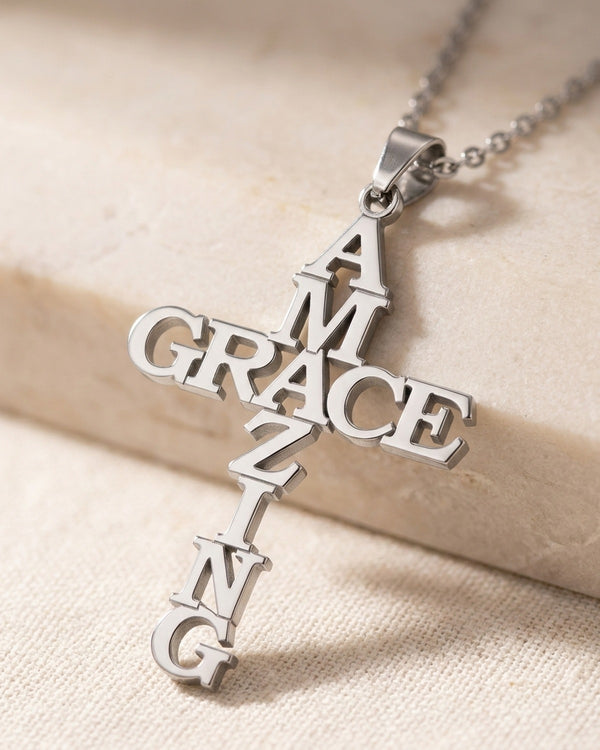
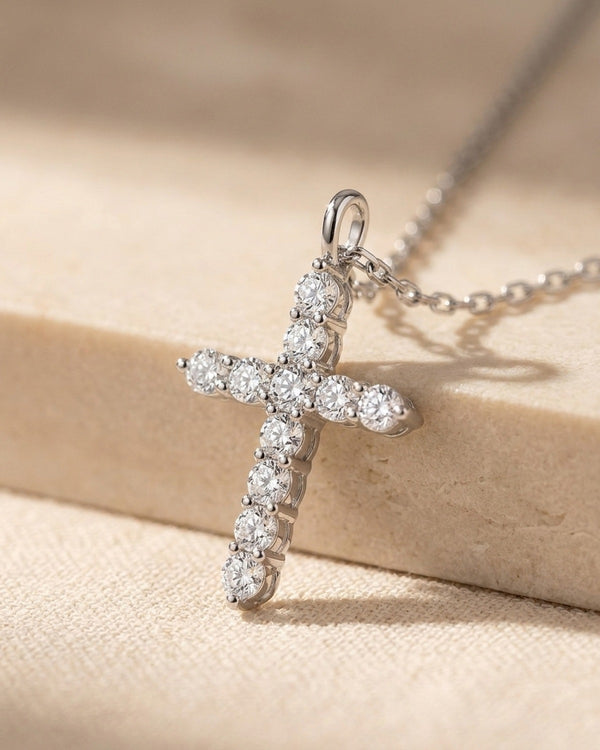
Some families give one small gift on the first Sunday of Advent instead of everything on Christmas morning, so it can be worn through the whole season. The Guiding Light is a tiny cross of clear stones, 6 x 10 mm in 925 sterling silver, a quiet picture of the light that is coming. The Graced Cross spells out Amazing Grace in polished stainless steel, 4 x 2.5 cm on a 60 cm chain, for someone who knows the hymn by heart.
You will find more pieces chosen for this season in our collection of Jewelry for Hope and New Beginnings. Shipping is free and tracked: orders are processed within 24 hours on business days and shipped with tracking. Order by early November if you want the gift in hand for the first Sunday, or by November 20 for Gaudete.
Frequently Asked Questions
When does Advent start in 2026?
Advent 2026 begins on Sunday, November 29, 2026. The other Sundays of Advent are December 6, December 13 (Gaudete Sunday) and December 20, and Christmas falls on Friday, December 25.
Why is one Advent candle pink?
The pink, or rose, candle is lit on the third Sunday of Advent, Gaudete Sunday, which falls on December 13 in 2026. Gaudete means Rejoice, and the Church allows rose vestments that day where it is the practice. The rose candle follows that custom; it is a tradition, not a requirement.
What order do you light the Advent candles?
Light one purple candle on the first Sunday, a second purple candle on the second Sunday, the rose candle together with the two purple ones on the third Sunday, and the last purple candle on the fourth Sunday. If your wreath has a white Christ candle in the center, light it on Christmas Eve or Christmas Day.
Is the Advent wreath Catholic or Protestant?
Both. The modern wreath is generally credited to Johann Hinrich Wichern, a Lutheran pastor in Hamburg, in 1839. Catholics in Germany adopted it in the 1920s, it reached North America in the 1930s, and today it is used in Catholic and Protestant churches and homes alike.
Conclusion: Four Candles, One Story
The Advent wreath meaning comes down to this: a circle for God's endless love, green branches for life that lasts, and a light that grows a little every Sunday until Christmas. Hope, peace, joy and love are good names for the candles, but the real lesson is the waiting itself.
Set up your wreath before Sunday, November 29, keep a short prayer by it, and let the flames do the teaching. And if you want something to hold through these weeks, a rosary by the wreath is a simple place to start.

Jewelry for Hope and New Beginnings
 The Guiding Light
149,99 €
 The Graced Cross
89,99 €

 The Simple Cross
79,99 €
 The Luminous Cross
149,99 €
Livraison offerte et suivie · Retours sous 30 jours · Garantie 1 an

Poursuivre la lecture


