How to Clean a Silver Chain Without Snapping the Links

A chain has far more surface area than a solid pendant, and most of it is folded away inside the links. That is why a chain you wear daily can look dull within weeks while the cross hanging from it still shines. The fix is not harder cleaning · it is cleaning that reaches the hidden spots and never stresses the metal. For a broader overview of preserving all your cherished pieces, we recommend consulting our comprehensive jewelry care guide before undertaking any deep cleaning process.
Table of Contents
- Why Chains Tarnish Faster Than Pendants
- What You Need to Reach Between Links
- Two Ways to Clean a Chain Safely
- Reaching Tarnish Deep in the Links
- Box, Rope, Curb & Snake: Style by Style
- Keeping a Chain Bright Between Cleans
- Chain-Cleaning Mistakes That Cause Breaks
- Frequently Asked Questions
- Conclusion
Why Chains Tarnish Faster Than Pendants
A chain sits flat against the skin along its whole length, so it collects sweat, oil, and skin acids over a much larger area than the pendant it carries. Tarnish is not a flaw · it is chemical proof that you own genuine sterling silver. Pure silver (99.9%) is too soft for a wearable chain, so it is alloyed into 925 sterling silver for the strength a link needs.
Where the Black Actually Forms
Sterling silver is 92.5% pure silver and 7.5% other metals, usually copper or zinc. Silver itself is fairly stable, but the copper reacts with oxygen and moisture to form copper oxide, and silver reacts with airborne sulfur to create silver sulfide, the dark layer we call tarnish. On a chain this layer settles first inside the links and around the clasp spring, the exact spots your fingers cannot polish, which is why a chain can look fine from a distance yet feel grimy up close.
Why Skin Contact Speeds It Up
Because a chain hugs the neck or wrist all day, your body chemistry drives most of its tarnishing. High humidity, pollution, and the pH of your skin all accelerate the reaction. According to metallurgical data on sterling silver, the pH level of a person's skin can cause jewelry to turn black faster for some individuals than others.
- Sweat and skin oils trapped along the full length of the links
- Contact with cosmetics, hairspray, and perfumes at the neckline
- Moisture sealed inside tightly woven links with no airflow

What You Need to Reach Between Links
Cleaning a chain is less about strong agents and more about reaching the gaps a finger cannot. The right small tools let you work between links and inside the clasp without dragging the metal. Most of what you need is already in your kitchen.
Gather the items below before you start. Skip rough paper towels and tissues · their wood fibers leave microscopic scratches that dull a polished chain over time.
- Baking Soda: The primary agent for chemical cleaning.
- Aluminum Foil: A catalyst for the ion exchange that reaches inside the links.
- Mild Dish Soap: Fragrance-free and phosphate-free is best.
- Microfiber Cloth: Essential for drying and polishing without scratching.
- Soft-Bristle Brush: A baby toothbrush is ideal for working between the links and around the clasp.
Two Ways to Clean a Chain Safely
A chain rewards patience over force, since the thinnest links are where it will fail if you pull or scrub too hard. Start with the gentlest method and only escalate if tarnish remains lodged in the weave.
Method 1: The Soap and Water Soak
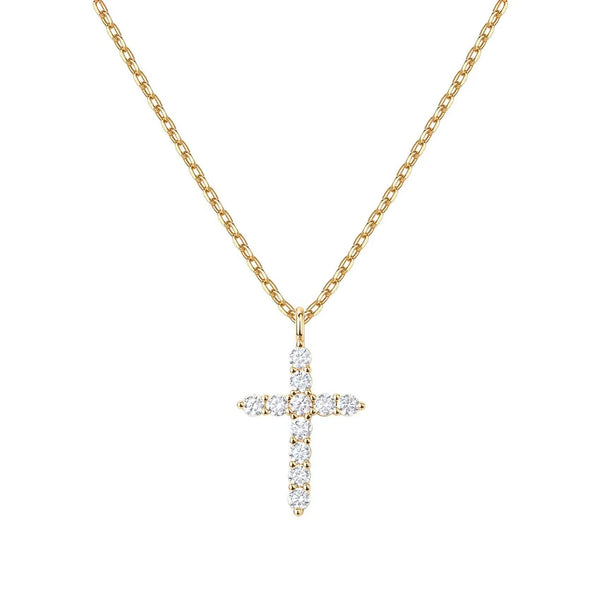
This is best for surface oils, dust, and light tarnish, and it is the safest choice for a chain holding a gemstone or pearl pendant. Open the clasp before soaking so water can flush the spring mechanism where grime collects. If you own intricate pieces like our Sterling Silver Cross pendants, this gentle bath keeps the detailing crisp without abrasion.
- Fill a small bowl with warm water (not boiling) and open the chain's clasp.
- Add a few drops of mild dish soap and mix until bubbles form.
- Lay the chain in loosely, never coiled, and let it soak for 5 to 10 minutes.
- Draw a soft toothbrush along the chain in the direction of the links to lift debris from each gap and the clasp.
- Rinse thoroughly under cool running water and dry immediately with a microfiber cloth.
Method 2: The Foil Bath for Tarnish Stuck in the Links
When a chain has turned black deep inside the weave where no brush can reach, an electrochemical bath does the work for you. The reaction pulls sulfur off every surface at once, including the hidden inner faces of each link, with no scrubbing that could stress thin metal.
- Line a glass bowl with aluminum foil, shiny side up.
- Lay the chain out flat on the foil so every link touches the metal, and open the clasp.
- Sprinkle a generous amount of baking soda over the chain.
- Pour boiling water over the mixture; you will see bubbling and smell a sulfur (rotten egg) odor.
- Let it sit for 5 minutes, then lift the chain out carefully with tongs.
- Rinse with cool water and polish dry.

Reaching Tarnish Deep in the Links
A soak loosens surface tarnish, but the crevices of a complex weave often hold on to it. This is where a chain differs most from a flat piece · you have to polish the inner faces of the links you can barely see, slowly and without yanking.
The Pull-Through Paste Method
A paste gives more control than a bath for stubborn spots, and pulling the chain through a treated cloth cleans all four sides of every link at once. It is a mild abrasive that polishes without cutting deep scratches.
- Mix three parts baking soda with one part water to form a thick paste.
- Spread a little paste onto a soft, lint-free cloth.
- Fold the cloth over the chain and draw the chain slowly through it, so the links rotate and every side gets polished.
- For tight kinks and the clasp, work a cotton swab dipped in the paste into the gap rather than forcing the cloth in.
- Rinse thoroughly and buff dry to a high shine.
It is important to note that while this method works wonders for solid silver, you should be cautious with plated items. If you are unsure about the base metal of your jewelry, refer to our guide on how to clean silver-plated jewelry to avoid stripping away the precious outer layer.
Box, Rope, Curb & Snake: Style by Style
The link pattern decides where dirt hides and how careful you must be. A tightly woven chain holds moisture inside; an open-link chain scratches itself. Match the method to the weave.
Rope and Snake Chains
Rope and snake chains are woven so tightly they look almost solid, which means water seeps into the inner weave and stays there, feeding internal tarnish and corroding the clasp spring. After cleaning, dry them completely before storage; a hair dryer on a cool, low setting helps drive moisture out of the inner weave. Never twist a snake chain to wring it out · a sharp kink in this style is permanent and weakens the link wall.
Box, Curb and Figaro Chains
These open-link styles are easier to reach into but scratch one another when the links rub during scrubbing. When cleaning items like our elegant Silver collection bracelets, lay the chain flat on a towel instead of bunching it in your fist, so the links do not act as abrasives against each other. Work out any knots gently with two pins before cleaning rather than pulling them tight.
2026 Note: The enduring appeal of minimalist layering sees many wearing several delicate chains daily. Stacked chains rub at every step, and that friction wears the plating-thin links and speeds tarnish where they cross. Clean each chain on its own to preserve its quiet brilliance for everyday devotion.
Keeping a Chain Bright Between Cleans
A chain that is stored and worn well rarely needs a deep clean. A few habits keep tarnish from settling into the links in the first place.
Store It Flat and Unknotted
Oxygen and moisture are the enemies of silver, and a coiled chain traps both inside its loops. Lay it flat or hang it in an airtight container or a tarnish-resistant pouch so no link presses moisture against another. A silica gel packet or anti-tarnish strip in the box absorbs the humidity that drives oxidation. Hanging a chain also stops the knots and kinks that form when it is dropped in loose.
The "Last On, First Off" Rule
Make your chain the last thing you put on and the first thing you take off. Because it lies directly on the skin, this single habit keeps perfumes, lotions, and hairsprays off the links, where their chemicals would otherwise dull the silver fastest.

Chain-Cleaning Mistakes That Cause Breaks
A chain is more fragile than it looks · its weakest link sets the limit, and a rushed shortcut can leave you holding two halves. Avoiding these pitfalls keeps your cherished pieces intact and bright.
- Do Not Pull a Tangled Chain: Yanking a knot tight to free it stretches and weakens the thinnest links, where the chain will eventually snap. Ease knots apart with two pins on a flat surface instead.
- Avoid Toothpaste: Modern toothpastes contain silica and whitening agents too abrasive for high-polished silver, leaving micro-scratches that dull the links over time.
- Skip the Bleach: Chlorine bleach accelerates tarnishing and can disintegrate the alloys in sterling silver, making the metal brittle and prone to snapping at a link.
- Limit Silver Dips: Commercial liquid cleaners are highly acidic. They work instantly, but overuse strips the outer layer and damages any intentional oxidation used in the design for contrast.
Frequently Asked Questions
How often should I clean my silver chain?
Clean a chain you wear daily about once a month, since it collects skin oil and sweat along its whole length. A chain worn occasionally only needs a light soap-and-water soak every 2 to 3 months to keep tarnish from settling between the links.
How do I get tarnish out from between tight links?
A brush cannot reach inside a tight weave, so use the aluminum-foil and baking-soda bath. The electrochemical reaction lifts sulfur off every inner surface of the links at once, with no scrubbing that could weaken the metal.
Does vinegar clean silver chains?
Yes, a mixture of white vinegar and baking soda can clean silver. Soaking your chain in a solution of 1/2 cup vinegar and 2 tablespoons of baking soda for 2-3 hours is an effective alternative to the aluminum foil method.
Why did my silver chain turn black so quickly?
A chain rests on the skin along its full length, so sweat, skin acids, and body chemistry tarnish it faster than a pendant. Contact with rubber, wool, or foods like eggs and onions adds sulfur, and high skin acidity speeds oxidation further.
Conclusion: Preserving Your Faith and Shine
Caring for a silver chain is more than a chore; it is a ritual of preservation that honors the craftsmanship and meaning of the piece you wear closest to your faith. Reaching the hidden tarnish between the links and treating the metal gently are what keep a chain shining for years rather than months.
At Bennett & Cross, we believe that quality jewelry should last a lifetime. By cleaning with care and storing your chain flat and dry, you protect your investment and keep your cherished pieces in heirloom condition. We invite you to explore our durable Sterling Silver Cross collection, crafted to withstand the test of time and backed by our comprehensive warranty.